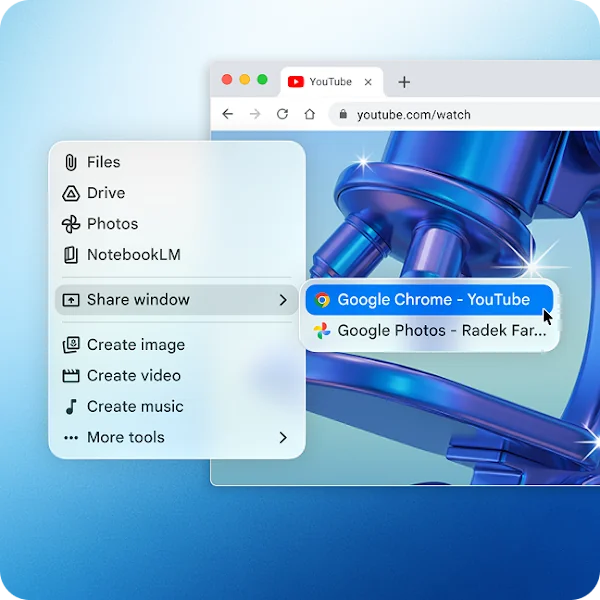
Google just launched its native Gemini desktop app for macOS today, and it's built entirely in Swift—not Electron. That's a deliberate technical choice that signals Google is serious about delivering a polished Mac experience. The app was developed by a small team that built over 100 features in under 100 days, and it largely mirrors what's available on the Gemini website, complete with keyboard shortcuts and window-sharing capabilities. But dig into the app's internals, and you'll find features that aren't functional yet—but clearly in the works.
Gemini for macOS Download Link
Hidden in the app's settings are configuration options for Gemini Live voice mode, including the ability to select different voices. This mirrors the mobile app's existing Live Mode experience. The feature doesn't work right now, but these settings strongly suggest Google plans to bring real-time voice conversations to the desktop.
When activated, Gemini Live would appear as a sphere overlay on the desktop, giving users a persistent conversational interface. References to screen sharing in Live Mode have also been found, which would let users show Gemini what they're looking at while speaking—a capability currently only available through AI Studio's Gemini Live models. A separate navigation section appears to exist for switching between the Live interface and the main application.
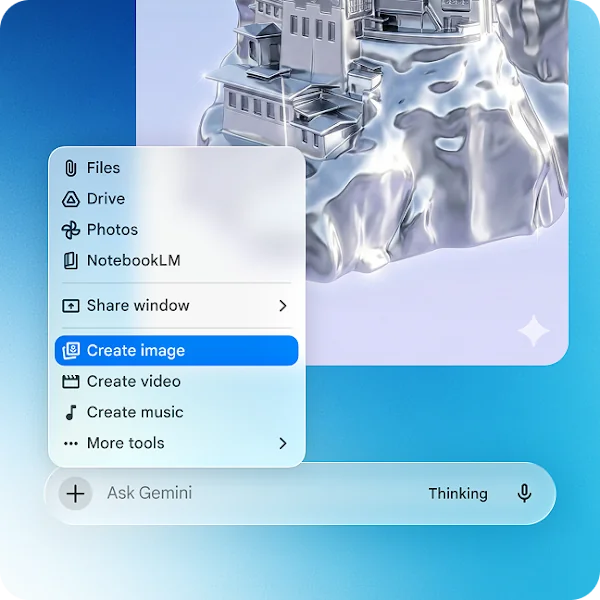
Google has called this initial release "just the beginning," saying it's building toward a "truly personal, proactive and powerful desktop assistant, with more news to share in the coming months." That language, combined with Google I/O 2026 scheduled for May 19–20, makes it likely that Gemini Live on desktop and other hidden capabilities will be formally unveiled there.
https://twitter.com/sundarpichai/status/2044452464724967550
The current app also ships without a dedicated Gems tab or a NotebookLM section in the sidebar, both of which are present on the web. These gaps will probably be closed as the app matures. For power users and professionals who rely on voice-driven AI workflows, a native desktop Live Mode with screen sharing would be a substantial addition to what's already shaping up as Google's most ambitious cross-platform AI push.