
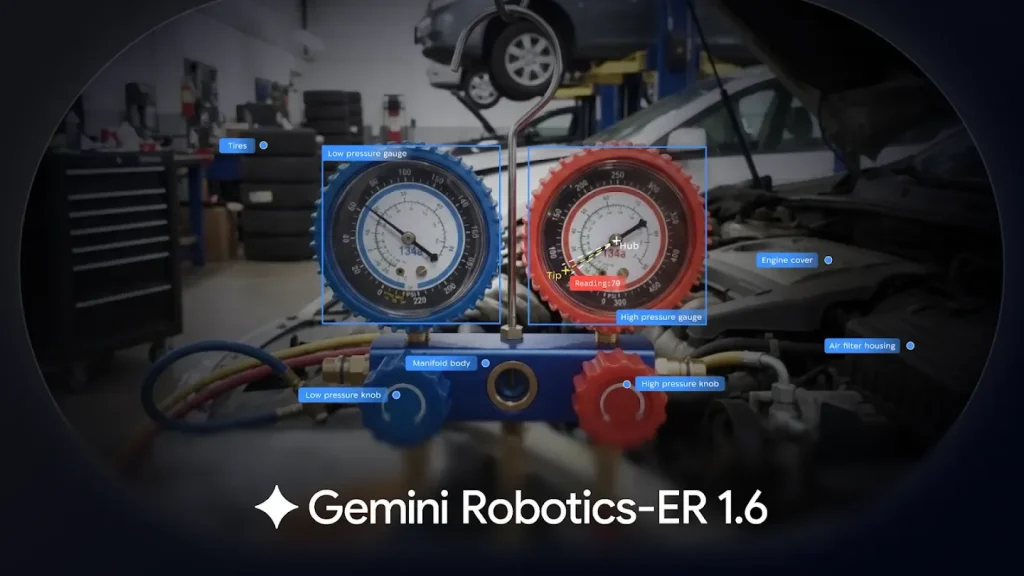
Google DeepMind just dropped Gemini Robotics-ER 1.6, an upgraded reasoning model that gives robots better spatial awareness and physical intelligence. This isn't just about better navigation—it's about understanding environments in ways that let robots actually interact with them. The model improves visual perception, spatial reasoning, and complex task planning, essentially giving machines a more sophisticated understanding of the physical world.
One standout feature? Robots can now interpret analog instruments like pressure gauges and sight glasses, a capability developed with Boston Dynamics. The model also integrates with tools like Google Search and third-party functions, positioning it as a key reasoning layer for autonomous agents that need to both think and act.
https://twitter.com/GoogleDeepMind/status/2044069878781390929
Availability and improvements
Gemini Robotics-ER 1.6 is available immediately to developers through the Gemini API and Google AI Studio, complete with sample code to help with integration. The initial rollout targets robotics developers and research teams building or upgrading physical agents for industrial, commercial, or research applications.
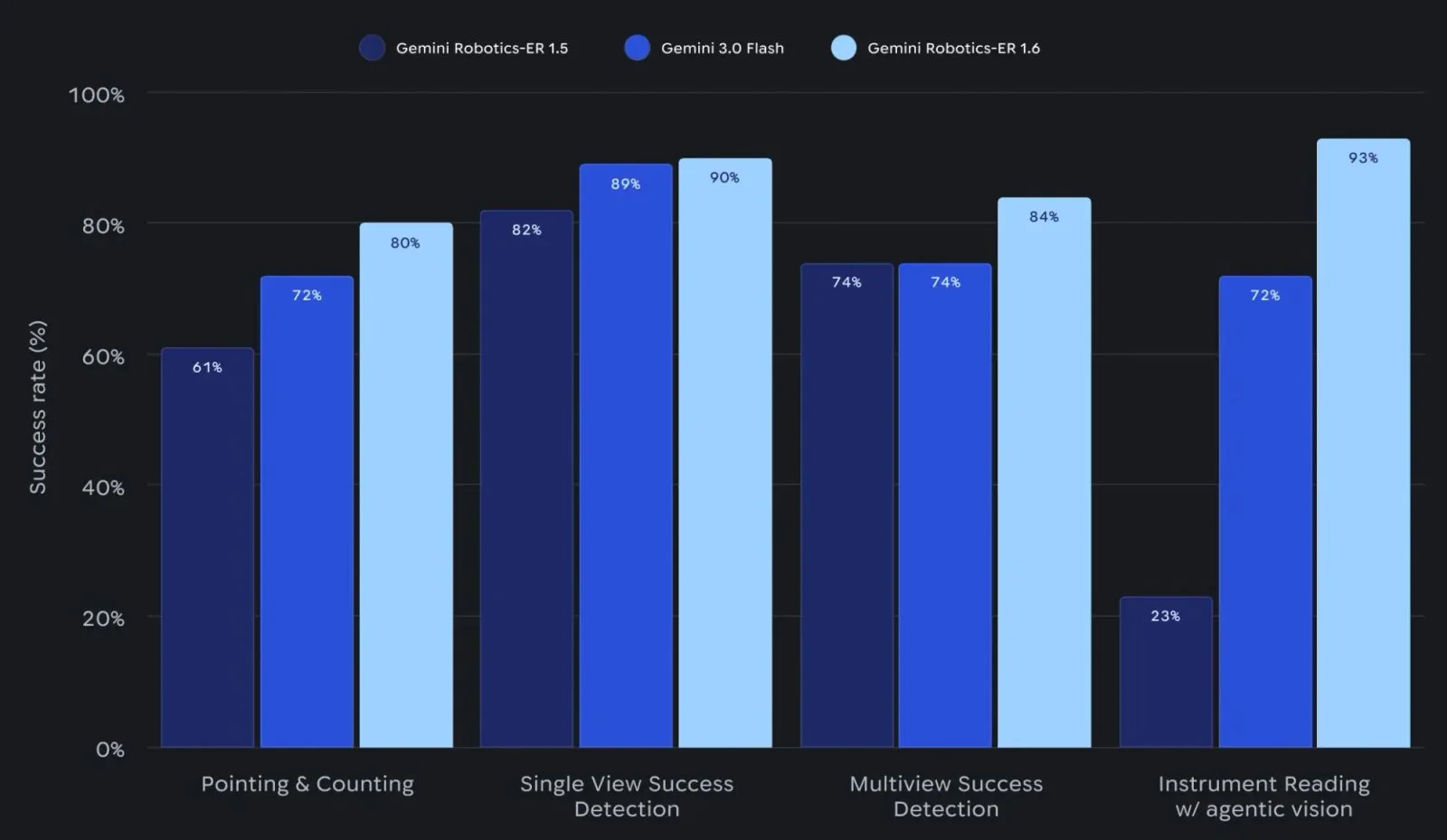
This version shows notable improvements over Gemini Robotics-ER 1.5 and Gemini 3.0 Flash, particularly in areas like accurate pointing, counting, and success detection for physical tasks. Early feedback from robotics researchers highlights the model's expanded capabilities and its potential to tackle previously challenging real-world problems.
Google DeepMind's continued focus on embodied reasoning reveals its ambition to set new standards for robotic autonomy. The company is leveraging its AI and robotics expertise to solve complex physical reasoning challenges, aiming to accelerate the development of intelligent agents that operate seamlessly across both digital and physical spaces.