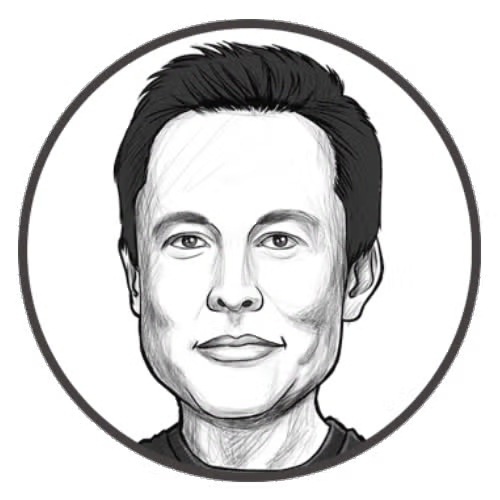
During the second week of Elon Musk's lawsuit against OpenAI, OpenAI president Greg Brockman took the stand on May 5 and revealed new details about the 2017 breakdown in negotiations over control of the company. Brockman also disclosed OpenAI's compute costs for the first time: they skyrocketed from about $30 million in 2017 to a projected $50 billion by 2026.
Early on, the team went through Forbes' billionaire list looking for donors, and Musk himself recognized that pure philanthropy couldn't sustain the company. Both sides agreed they needed to transition to a for-profit structure. The disagreement was over the terms. Musk demanded 51% control and the CEO position, claiming he needed $80 billion to build a city on Mars — and planned to raise it using his OpenAI equity.
During a meeting in August 2017, Sam Altman proposed splitting the equity equally among the four founders. Musk refused on the spot. "You're all very talented, but I could start another AI company tomorrow with a single tweet," he told the team. When the founders then offered to let him buy additional shares at market price, Musk lost his temper. "He got up and rushed at me — I honestly thought he was going to hit me," Brockman recalled. Musk grabbed a Tesla drawing by former chief scientist Ilya Sutskever, slammed the door, and left — immediately cutting off the quarterly donations he had promised.