MiniMax Slashes Prices by Half After Developers Revolt Over Stealth Hike

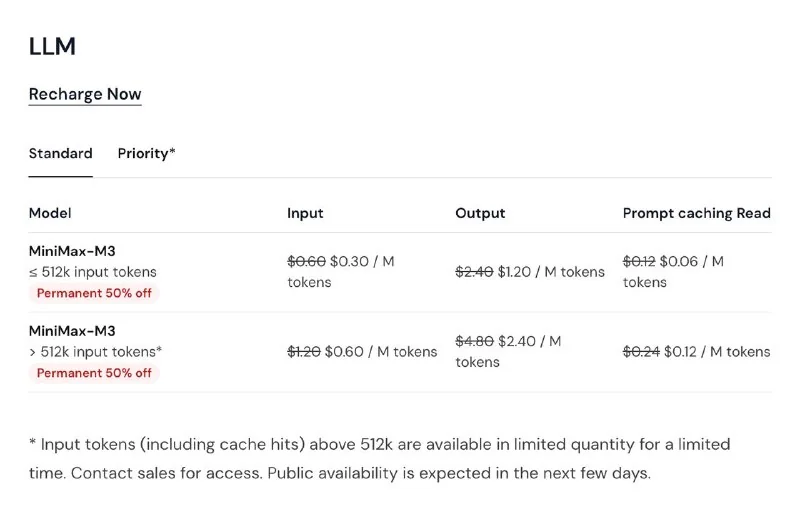
Open MiniMax's latest pricing page and you'll see its flagship model MiniMax-M3 marked with a red "permanent 50% discount." Under standard pay-as-you-go pricing, the cost per million input tokens within 512k tokens has dropped from $0.60 to $0.30, while output went from $2.40 to $1.20. Even longer contexts exceeding 512k tokens get the same haircut.
The dramatic price cut comes after a severe crisis of trust less than two weeks earlier. On June 1, when MiniMax launched the M3 model, it quietly switched from per-call billing to per-token billing without any warning, effectively reducing the subscription benefits for existing users. Many developers saw their API costs skyrocket by over 250% overnight. Facing a flood of complaints on V2EX (a popular Chinese developer community) and a wave of users filing grievances on Black Cat Complaints (a Chinese consumer rights platform) plus the China Consumers Association, parent company XiYu Technology was forced to issue an apology on the evening of June 2. It reset user quotas and offered extra compensation.
But the apology wasn't enough to stop the developer exodus. Under the brutal price war in China's large language model market, especially as competitors like DeepSeek kept poaching users with rock-bottom prices, MiniMax finally caved on June 15 — just two weeks after the M3 launch — permanently slashing prices in half. The whiplash from a silent price hike to a desperate half-off sale reveals just how little pricing power and strategic flexibility these startups actually have.
The price cut may have temporarily placated developers, but it sparked fresh concerns in the secondary market. Goldman Sachs warned that aggressive price cuts would severely eat into margins, cutting its target price for MiniMax by 14%. JPMorgan similarly downgraded the stock, bluntly stating that a rapid price drop after a new model launch often signals weaker-than-expected capabilities. In the Hong Kong stock market's paired trade of long Zhipu AI and short MiniMax, investors have clearly swung toward the rival.