

OpenAI just announced a major update to its Agents SDK—the toolkit developers use to build and run AI agents. The new version promises to make these digital assistants more capable at handling tasks like file manipulation, code execution, and command-line operations, all while keeping things secure and efficient.
The next evolution of the Agents SDK | OpenAI
https://openai.com/index/the-next-evolution-of-the-agents-sdk/
https://twitter.com/OpenAIDevs/status/2044466699785920937
What's new in the update
The big improvements center on what OpenAI calls the "harness"—the control mechanism that lets an agent work across files and tools on a PC. It's gotten smarter, and there's now a built-in sandbox execution feature to run tasks safely.
Before this update, building an agent meant developers had to manage everything themselves: retries, authentication, state management, error handling. If you wanted your agent to work with external tools, you had to write the integration code from scratch. More tools meant more maintenance headaches.
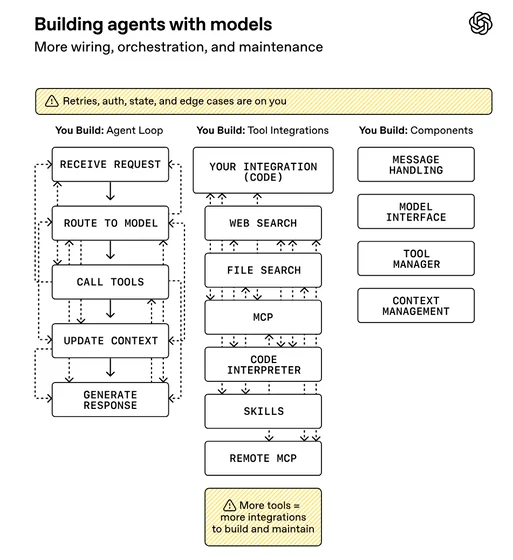
With the updated Agents SDK, OpenAI says it's taking over a lot of that grunt work. "Loops, tools, and maintaining an execution environment that can pause and resume—we'll handle that," the company explains.
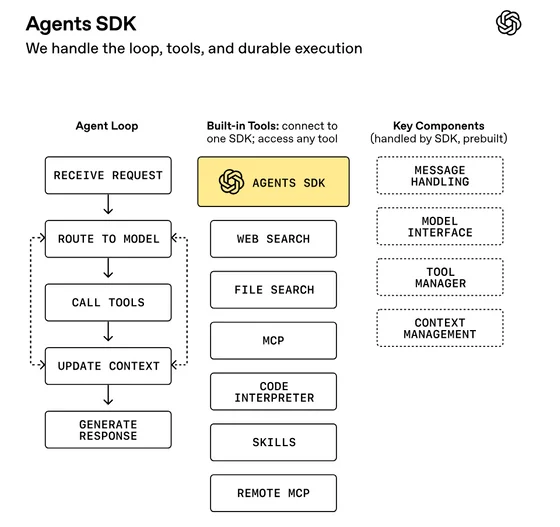
Agents need a workspace to do things like read and write files, install dependencies, run code, and use tools safely. The SDK now supports native sandbox execution out of the box, so developers don't have to build their own from scratch.
For sandboxing, there's built-in support for Blaxel, Cloudflare, Daytona, E2B, Modal, Runloop, and Vercel. Developers can also create custom sandboxes if they prefer. A new "manifest abstraction" layer aims to improve portability, letting you build agent execution environments consistently—from local prototyping all the way to production deployment.
A smarter approach to security
Another key change: the harness and execution environment are now separated.
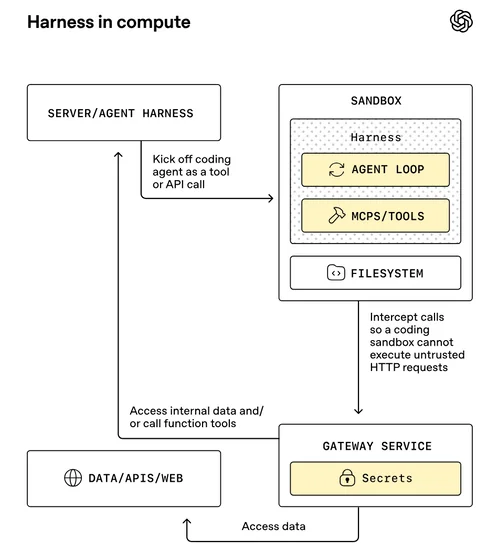
Why does that matter? If the harness lived inside the sandbox, a prompt injection attack or malicious code could potentially compromise the harness itself. By keeping them separate, OpenAI says it's not just boosting security—it also enables features like saving a sandbox's state. If work gets interrupted, you can restore the sandbox and pick up where you left off.
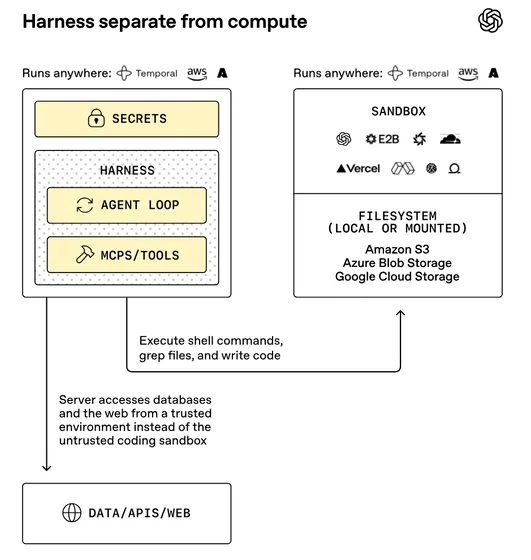
You can even create multiple sandboxes for a single harness, letting you parallelize tasks.
Pricing and availability
The Agents SDK itself remains free to use. You'll only pay for the tokens your agent consumes and standard usage fees for any tools it calls.
Right now, the updated SDK is only available for Python. TypeScript support is coming later. OpenAI also says additional features like "code mode" and "sub-agents" are on the roadmap.