
AI-powered learning platform Gizmo just landed a $22 million Series A round. The funding was led by Shine Capital, with participation from Ada Ventures, Seek Investments, GSV, and NFX—the latter of which also led Gizmo’s $3.5 million seed round.
According to the company, the fresh capital will go toward expanding its engineering and AI teams, boosting its presence in the U.S. college market, and accelerating product growth. CEO Petros Christodoulou noted that Gizmo had just seven employees before the raise and plans to grow to around 30.
Founded in 2021 by Cambridge University graduates, Gizmo is headquartered in London. Its three co-founders are Petros Christodoulou (CEO), Robin Jack (CTO), and Paul Evangelou (CPO).
Billions of students worldwide learn on their phones, but for the 16–21-year-old exam-prep crowd, study habits haven’t changed in decades. Meanwhile, the platforms they’re glued to every day have mastered the art of addiction—personalized feeds, instant feedback, social hooks, random rewards.
What if you could apply the same AI tricks that keep us scrolling to make learning just as compelling? What if you could reinvent “screen time” altogether?
“Our goal isn’t to reduce screen time—it’s to make screen time more valuable,” said Petros Christodoulou, Gizmo’s co-founder and CEO. “People aren’t addicted to their phones; they’re addicted to progress, novelty, connection, and rewards. Gizmo redirects that energy toward things that actually shape their future. With this new funding, we’re doubling down on making learning the most engaging, valuable thing you do on your phone.”
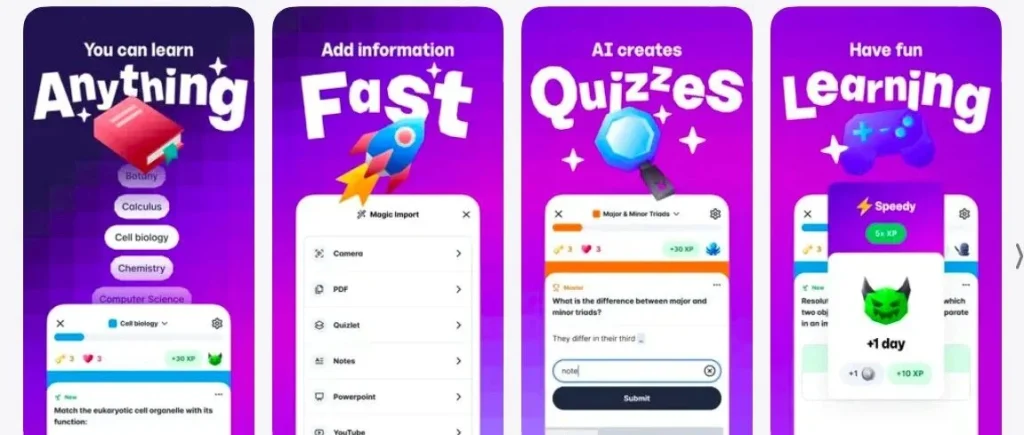
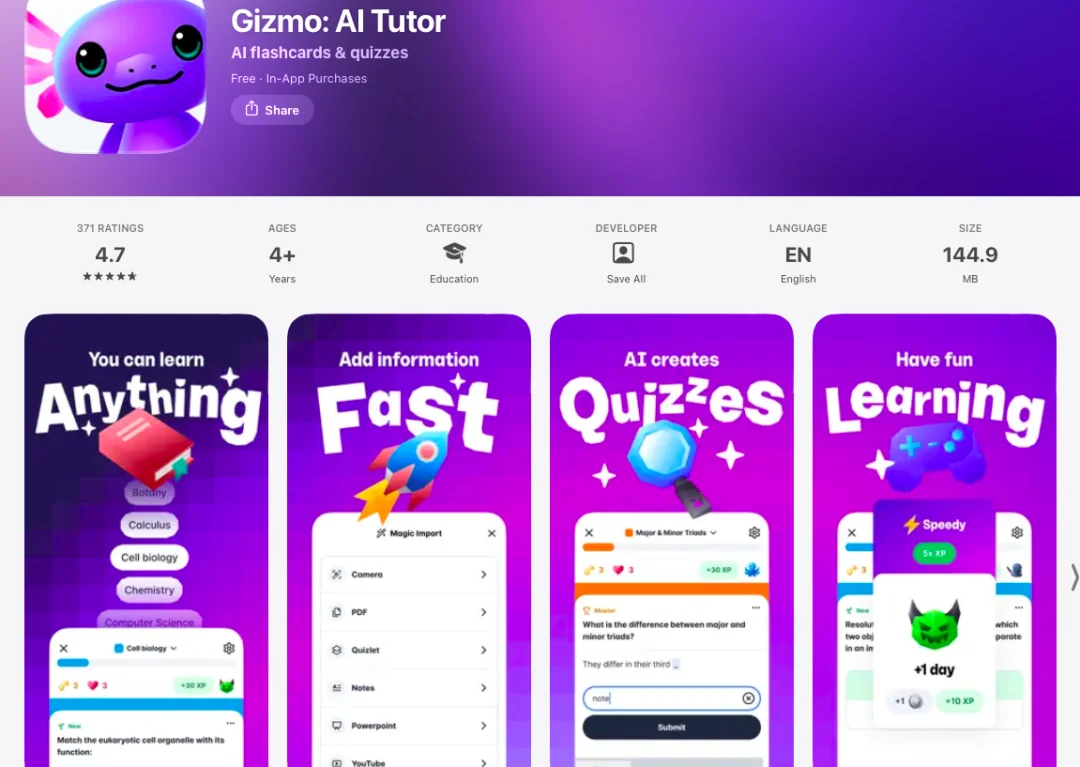
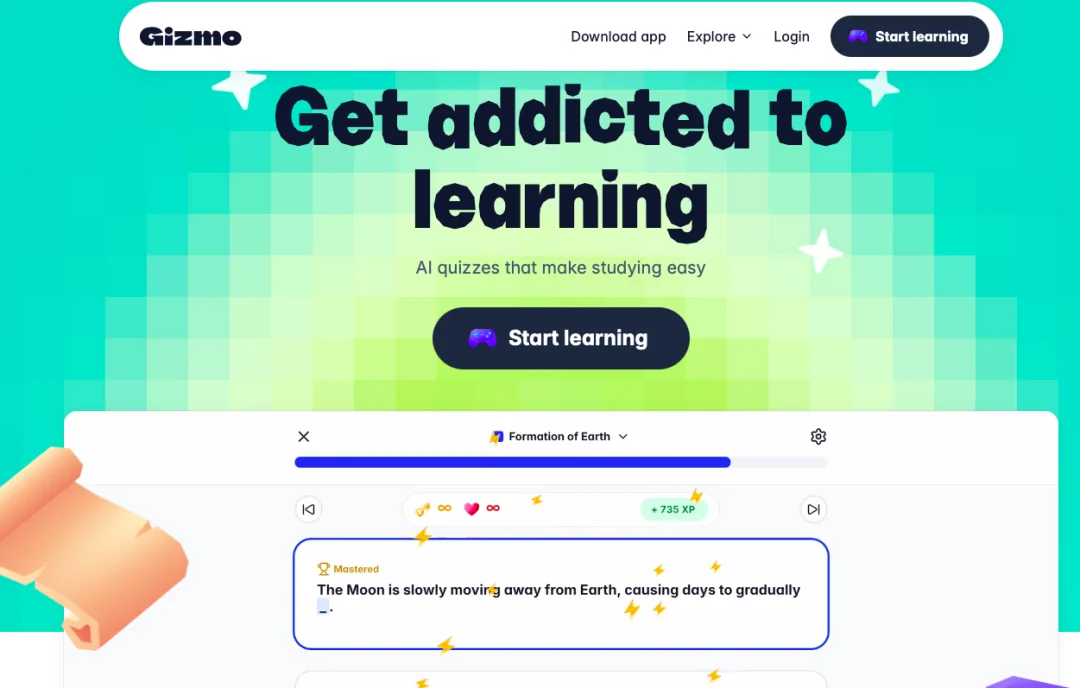
Gizmo’s core idea is to use game mechanics to drive learning, turning passive study materials into an active system. It can convert student notes, documents, or web content into personalized, gamified interactive materials in seconds—think interactive flashcards, adaptive quizzes, and game-like challenges. The platform also builds in social features like leaderboards, streaks, and friend challenges to boost retention.
Back in 2023, Gizmo had just over 300,000 users. Today, that number has exploded by more than 40 times to 13 million, spanning over 120 countries and regions.
“Gizmo has cracked a problem that’s plagued consumer learning for years: getting students to voluntarily, actively engage at scale,” said Ethan Daly, general partner at Shine Capital. “Thirteen million users are choosing Gizmo to turn dry knowledge into interactive, personalized, rewarding learning experiences—and it’s working. We believe Gizmo will become the defining learning platform for the next generation of students and lifelong learners. We’re thrilled to support Petros, Robin, Paul, and the team as they take it global.”
The competitive landscape
Gizmo isn’t the only player betting on AI to make learning stickier.
In late August 2025, ChatGPT for Education rolled out “QuizGPT,” a feature that generates interactive flashcards and quizzes from any topic or uploaded material. It supports documents like PDFs, PowerPoint files, and plain text.
In September 2025, Google Labs introduced a research experiment called “Learn Your Way,” which transforms static textbooks (or other source materials) into interactive, multi-format content—think immersive text, slides, audio lessons, and mind maps.
StudyFetch, founded in 2023, lets users upload course materials and create interactive study sets. Learners can also work with an AI tutor, make flashcards, generate notes, and take practice tests. By 2025, the platform had reached 6 million students across K–12 and higher ed.
Also in September 2025, another AI learning product called Oboe launched. On its homepage, users simply type a question into a box, and Oboe serves up a tailored lesson with text, podcast-style audio, flashcards, quizzes, and more.
With AI advancing rapidly, new education tools are popping up faster than ever. They might look different on the surface, but they’re all chasing the same goal: How do you make learning more efficient, more active, and more immersive?