
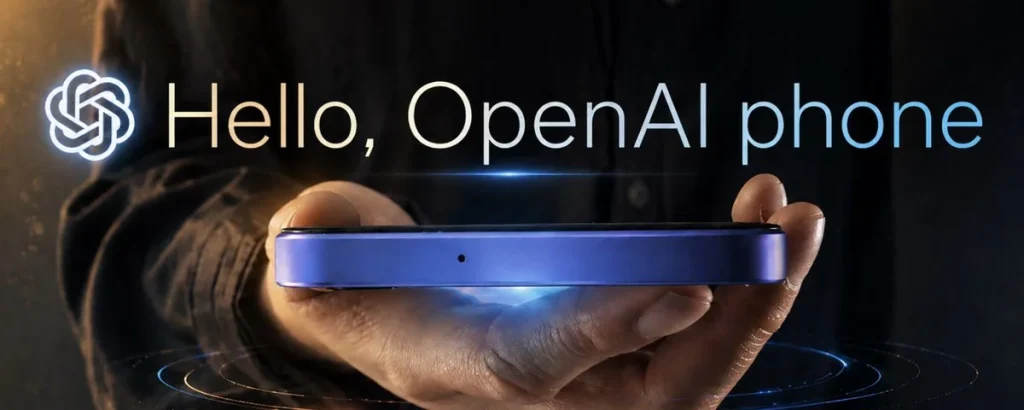
The smartphone as we know it is about to get a serious AI overhaul. According to the latest industry checks, OpenAI is teaming up with chipmakers MediaTek and Qualcomm to develop custom smartphone processors, with Luxshare signed on as the exclusive system co-design and manufacturing partner. Mass production is expected in 2028.
Why would OpenAI, a company built on software and cloud services, want to make a phone? The answer boils down to one thing: the AI agent.
AI agents are redefining smartphones
People don't want a pile of apps. They want to get things done. An AI agent that understands your context in real time can fundamentally change how you interact with your phone. To deliver that, OpenAI needs full control over both the operating system and the hardware. The smartphone is the only device that captures your complete real-time state — the most important input for an AI agent. And smartphones will remain the largest device category for the foreseeable future.
Tightly integrated cloud and on-device AI
The phone needs to continuously understand the user's context. Power consumption, memory hierarchy management, and basic small-model execution will be key processor design considerations. More complex or compute-intensive tasks will be handled by cloud AI.
OpenAI's advantages are clear: a strong consumer brand, years of accumulated user data, and leading AI models. Smartphone hardware is already mature, so OpenAI can work with the existing supply chain. On the business model side, expect bundling subscriptions with hardware and building a new AI agent ecosystem with developers.
MediaTek and Qualcomm are the chip partners
Specifications and suppliers are expected to be finalized by late 2026 or the first quarter of 2027. As an example, the revenue contribution of a single MediaTek × Google TPU Zebrafish chip is roughly equivalent to 30–40 AI agent smartphone processors. If the initial target is the global high-end smartphone segment — about 300–400 million units per year — the replacement cycle could become another major growth driver. It's a similar story to what we've seen from former OpenAI engineers who are also betting on AI-native hardware.
Luxshare gets a chance to shine
No matter how hard Luxshare tries, it will be difficult to surpass Hon Hai's (Foxconn's) assembly position in Apple's supply chain. That makes this project especially meaningful. With an early position in the supply chain, Luxshare could become a leading beneficiary in the next smartphone generation.
Check out the concept design below — a glimpse at how an AI agent phone might look compared to today's iPhone.
