
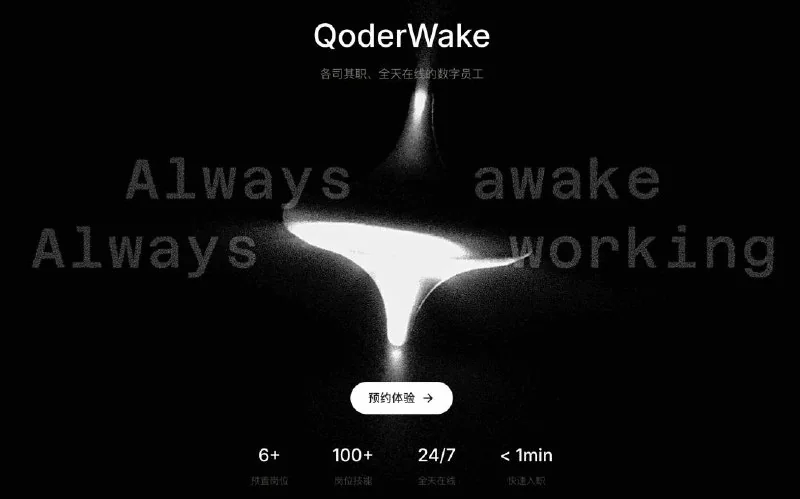
Alibaba just released an enterprise-grade AI agent called QoderWake. It's being marketed as a "digital employee" — something that can step into real workflows as a programmer, an operations person, or an analyst. Alongside it, the company also launched a mobile app for Qoder, letting users remotely control their desktop Qoder instance from their phone.
What sets QoderWake apart from generic AI agents is its Harness-First architecture, which is basically all about remembering what it did. After every task, the system distills its experience into five categories: memory, skills, strategy, validation rules, and workflow. Next time it encounters a similar problem, it just pulls from those libraries instead of starting from scratch. There's also an internal Anti-Rot Governance mechanism that continuously prunes stale knowledge, merges conflicting lessons, and retires strategies that no longer work.
The first role Alibaba has put into production is the "digital programmer," and it's already working inside the company. When code changes, it automatically compiles a summary of what's different. If something breaks, it diagnoses the issue and writes an initial report. When an alert fires, it triages the incident and decides whether to escalate to a human. Alibaba says that for single-issue root cause analysis, the time dropped from 30 minutes to 2 minutes — and the entire workflow runs without human intervention. More roles like digital analyst and digital customer manager are rolling out soon.
Qoder's mobile app does something most IM-integrated agents don't: it shows the agent's full chain of thought and workflow, complete with proactive pop-ups that ask users to confirm key steps. It already supports all the capabilities of Qoder's CLI, and Alibaba plans to connect it across the full product line — Qoder IDE, QoderWork, and QoderWake. The latter is now in invite-only testing. Around the same time, Qoder also halved the multiplier on its Ultimate model tier, making complex AI tasks 50% cheaper.