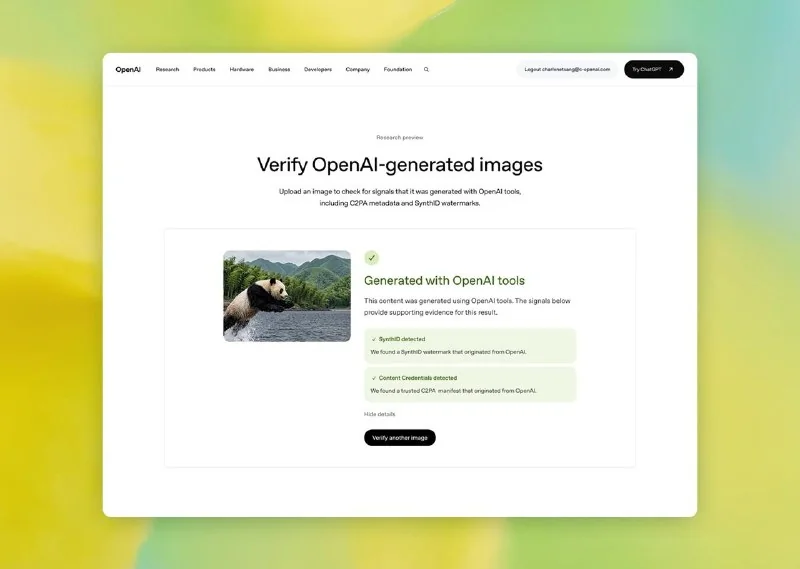
In a surprising move, OpenAI is partnering with former rival Google DeepMind to embed SynthID invisible watermarks into images generated by ChatGPT, Codex, and its API. The company is also making its images compliant with the C2PA content credentials standard and launching a public preview of an image verification tool.
C2PA metadata relies on cryptographic signatures to record provenance, but those metadata tags are easily stripped when users download, screenshot, or convert image formats.
To patch that vulnerability, OpenAI is integrating SynthID, Google DeepMind's imperceptible watermarking technology that encodes identifiers directly into image pixels.
Even after a screenshot or other re-processing, SynthID can still be detected. This two-layer defense combines the rich context of metadata with the persistence of an invisible watermark.
Alongside the update, OpenAI launched a verification website (openai.com/research/verify), now available as a public preview.
Users can upload images directly in the browser, and the tool checks for OpenAI's Content Credentials or SynthID watermarks.
OpenAI is being cautious about its conclusions, though. Because watermarks and metadata can still be forcibly stripped in extreme cases, even if the tool finds no anti-tampering signals, it can't definitively say an image wasn't AI-generated.