
Alibaba's Tongyi Lab just dropped a major update to its speech recognition model, and it's aiming to understand the world—and all its accents.
https://twitter.com/Ali_TongyiLab/status/2046110521280393481
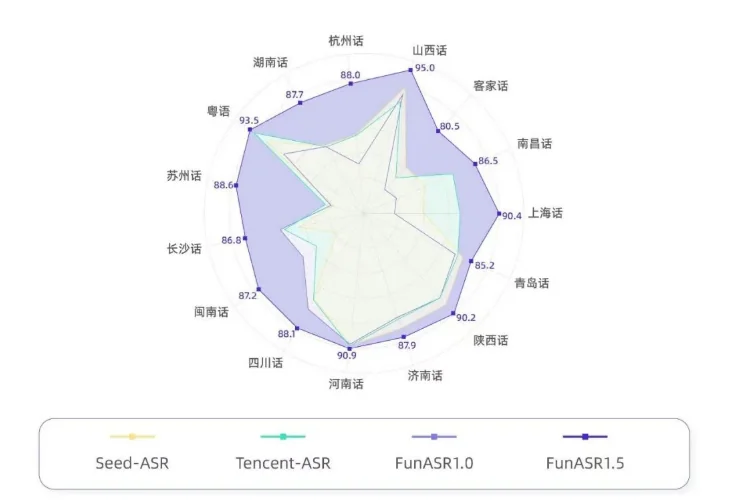
Fun-ASR 1.5 now supports 30 major languages and can recognize the seven major Chinese dialect families (Mandarin, Wu, Xiang, Gan, Hakka, Min, and Yue), along with over 20 local accents. The numbers are impressive: compared to the previous version, the average character error rate (CER) for typical dialect scenarios dropped by 56.2%. Five dialects now have over 90% recognition accuracy, and 15 exceed 80%, a significant leap for transcribing and understanding regional speech.
A polyglot model for a messy world
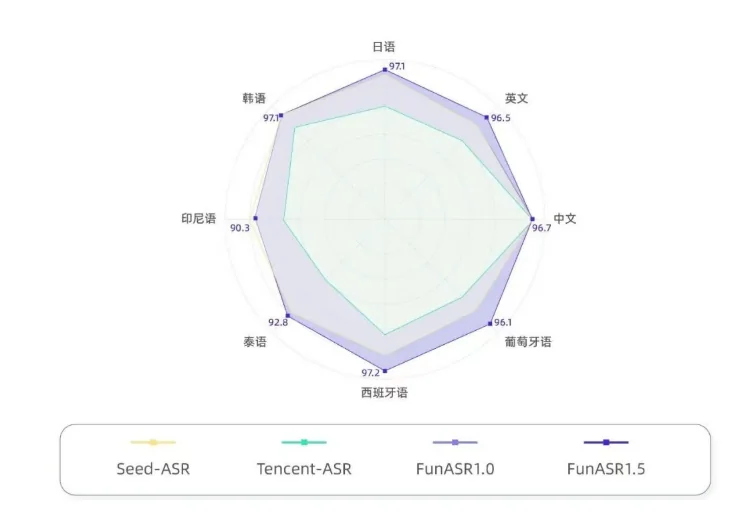
On the multilingual front, Fun-ASR 1.5 uses a unified training framework to handle mixed speech across its 30 supported languages, including Chinese, English, Japanese, Korean, and Arabic. The kicker? It doesn't need a preset language tag. It can figure out what you're speaking on the fly, which could be a game-changer for cross-border collaboration and international calls where people code-switch without warning.
From ancient poetry to modern punctuation
The Tongyi team also took a deep dive into China's literary heritage. They built a specialized corpus of recited classical texts, including the Book of Songs, Songs of Chu, and Tang and Song dynasty poetry. In internal tests, the model achieved a 97% character-level accuracy rate on these ancient verses.
To make the transcribed text more usable, Fun-ASR 1.5 adds smart post-processing. Alibaba says the model can automatically insert punctuation based on semantics and normalize informal spoken language into clean text (a process known as inverse text normalization, or ITN), which should cut down on manual editing.
Fun-ASR 1.5 is now available via API through Alibaba Cloud's Bailian platform. It's a notable entry in the race for practical, multilingual AI, arriving just as other giants like OpenAI and Anthropic are pushing their own models into new domains like coding and design.