OpenAI just launched ChatGPT for Clinicians, a specialized version of its chatbot built for clinical workflows. It's free for verified US physicians, nurse practitioners (NPs), physician assistants (PAs), and pharmacists.
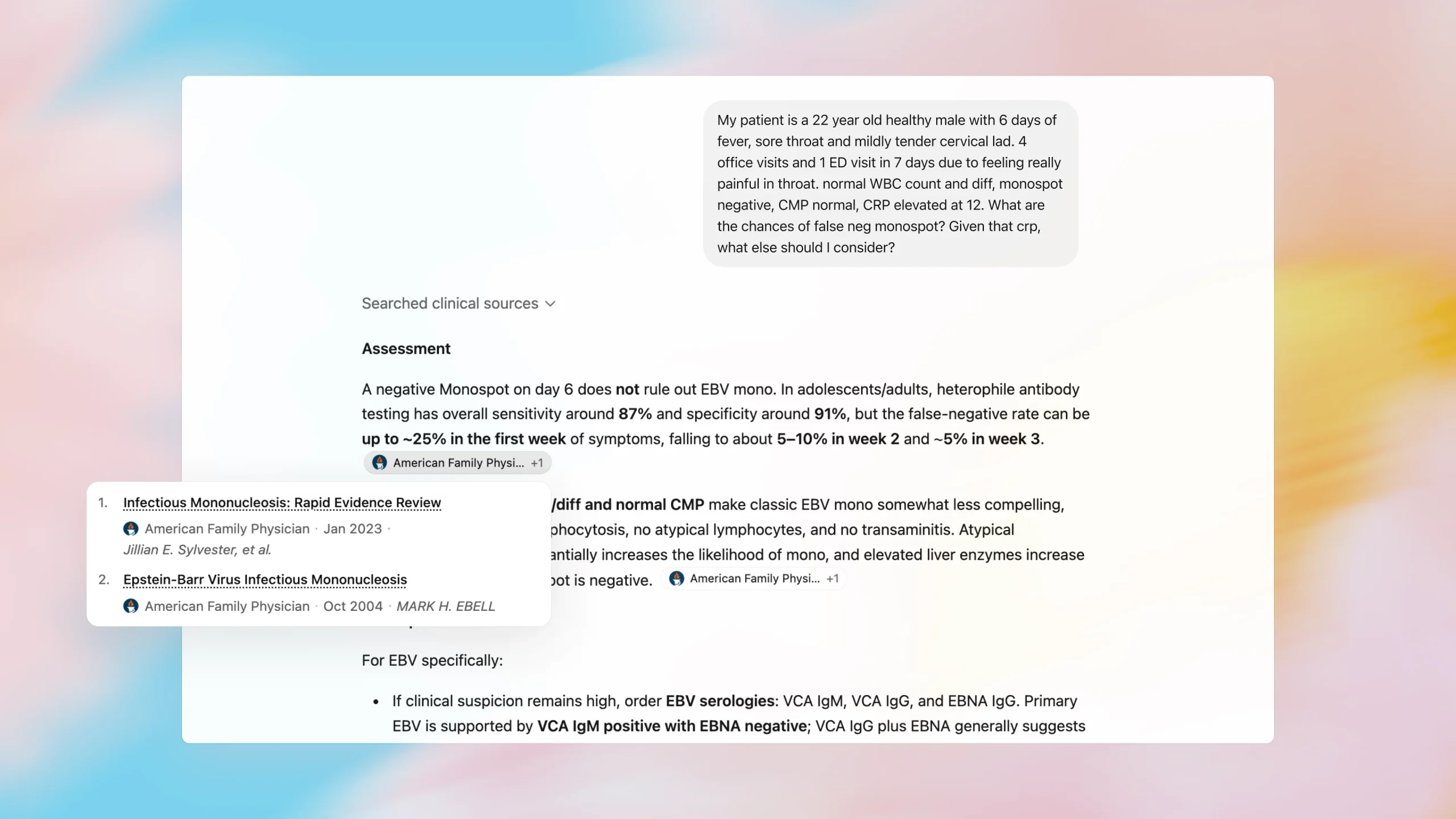
The tool gives healthcare workers access to OpenAI's latest models for handling clinical questions. A new Skills feature lets users save common workflows—like referral letters and prior authorizations—as reusable templates. Its clinical search function pulls real-time citations from peer-reviewed literature with proper attribution, while a deep research mode can essentially act as a proxy for conducting medical literature reviews.
When users search for clinical questions in ChatGPT, qualifying literature reviews can automatically count toward Continuing Medical Education (CME) credits. HIPAA compliance is available through an optional Business Associate Agreement (BAA), and conversations aren't used for model training.
Before launch, OpenAI's physician advisors tested 6,924 conversations in their daily work, with 99.6% of responses rated safe and accurate. In a citation test of 355 samples, ChatGPT for Clinicians cited standard sources more frequently than human physicians did.
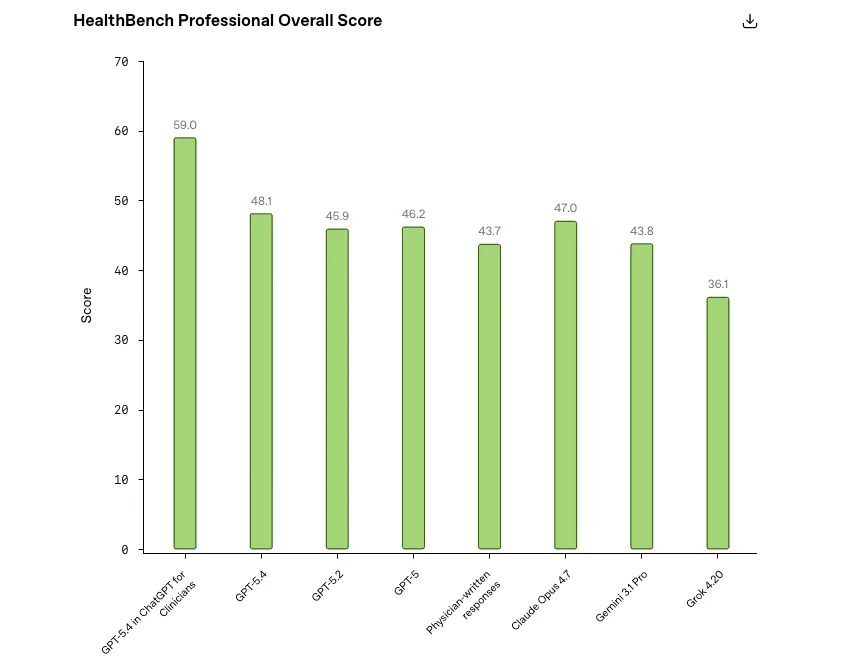
OpenAI simultaneously released the HealthBench Professional open benchmark, covering three types of clinical tasks: care consultation, documentation writing, and medical research. GPT-5.4 in the ChatGPT for Clinicians environment scored 59.0 overall, beating the base GPT-5.4's 48.1, Claude Opus 4.7's 47.0, Gemini 3.1 Pro's 43.8, human physicians' written responses at 43.7, and Grok 4.2's 36.1. This launch follows a recent hours-long outage that affected ChatGPT and Codex, highlighting the growing complexity of OpenAI's service ecosystem.