
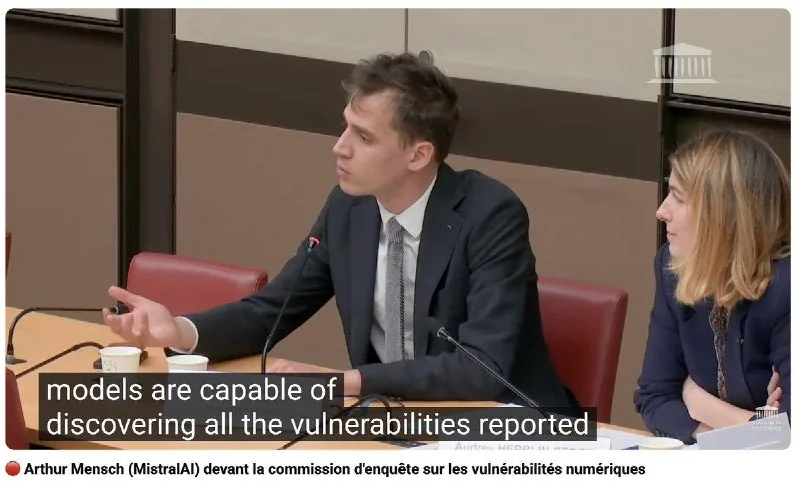
Mistral AI CEO Arthur Mensch made it clear to the French parliament: his company is not for sale. In a hearing before the National Assembly, Mensch dismissed concerns that the AI startup might be snapped up by a US tech titan. He criticized the European startup culture of building to flip, arguing that a successful company doesn't get acquired — and that being acquired is, in some sense, a failure.
For the first time, Mensch publicly challenged Anthropic, the US safety darling, claiming Mistral's models are fully capable of finding the same network vulnerabilities that Anthropic's Mythos tool discovered.
To back up its independence, Mistral is spending €1 billion on R&D this year. Mensch revealed that 75% of the company's revenue currently comes from Europe. On the technical side, Mistral concentrates its compute on training massively large models internally, then distills them into smaller, more efficient versions for customers. To secure its compute autonomy, the company plans to bring an 80 MW cluster online in France next year, with a long-term goal of 1 GW by 2029.
Mensch stressed that AI is essentially about converting electricity into tokens. Thanks to France's reliance on nuclear power, deploying compute there dramatically reduces carbon footprint. Using the example of a 1 GW data center costing €50 billion to build, he noted that electricity costs amount to only 10% of the final output value. He warned that if Europe backs away now due to high costs, it will lose control of its compute infrastructure — and importing AI services from the US could result in a trade deficit of over a trillion euros per year.