
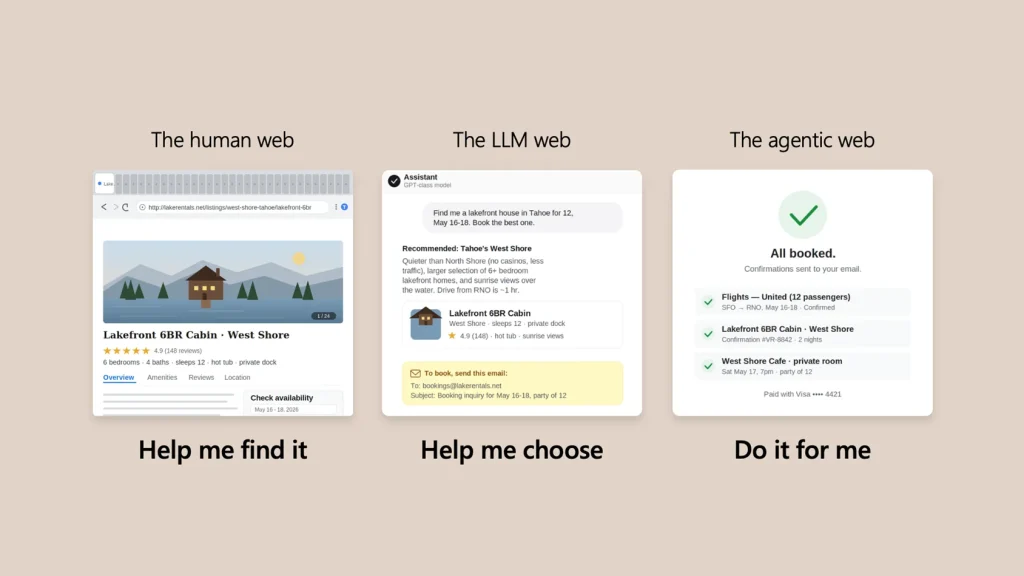
Microsoft's AI monetization VP Tim Frank announced a set of commercial infrastructure updates aimed at the "agentic web" — a world where AI agents make decisions on behalf of users. The goal: make sure publishers, merchants, and advertisers can still be discovered, cited, and transacted with when a human isn't clicking around.
The updates come in three buckets.
First, the Publisher Content Marketplace (PCM), first reported by Axios last year, is now scaling up. PCM lets publishers get compensated when AI platforms cite their paywalled content — covering map data, product catalogs, news, health info, and other non-free information. Copilot is the first demand-side partner, and Microsoft is in talks with other AI platforms to join. Unlike the current one-time, bulk licensing deals (often using RAG — retrieval-augmented generation) between publishers and AI companies, PCM is a continuous, market-driven exchange.
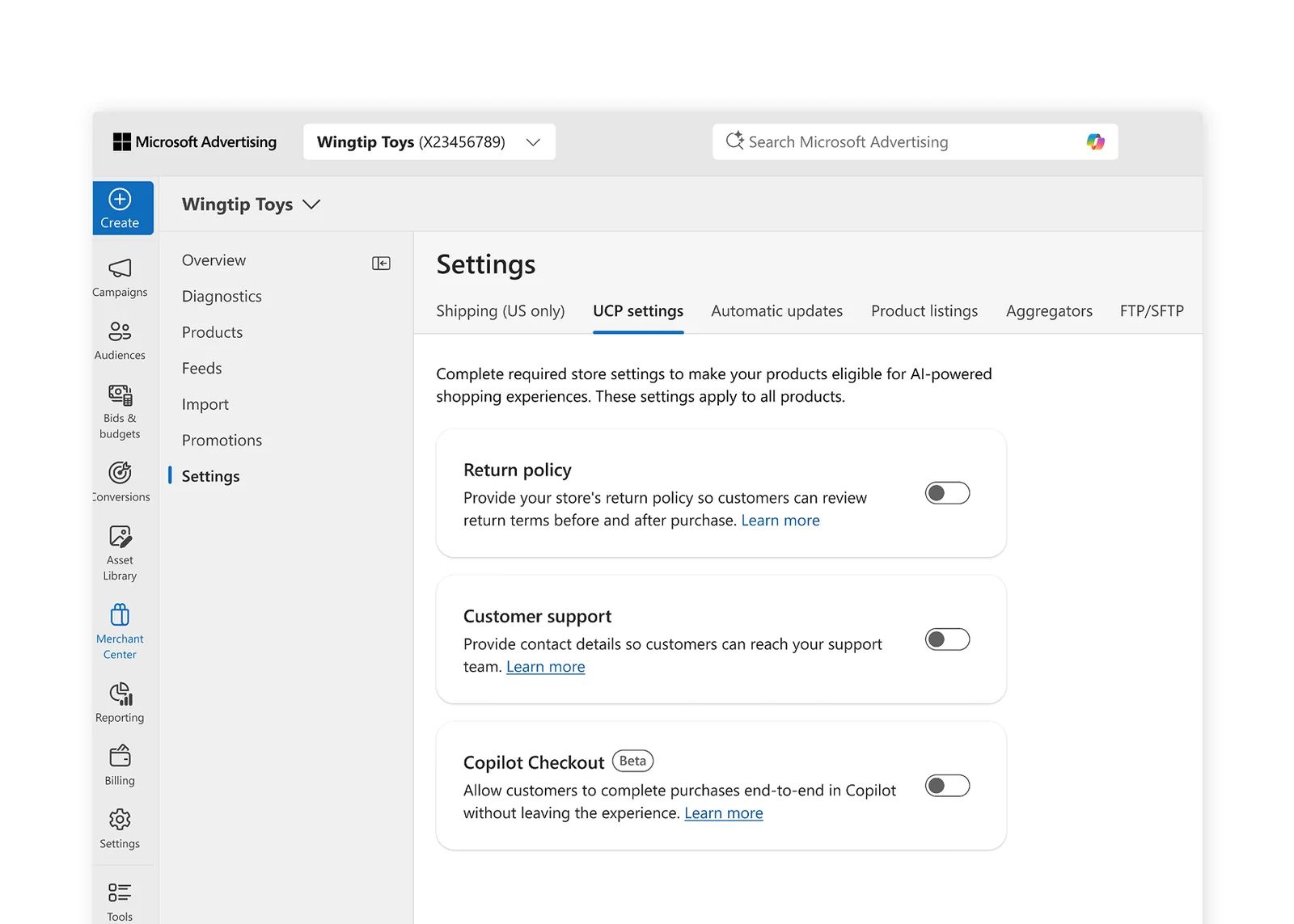
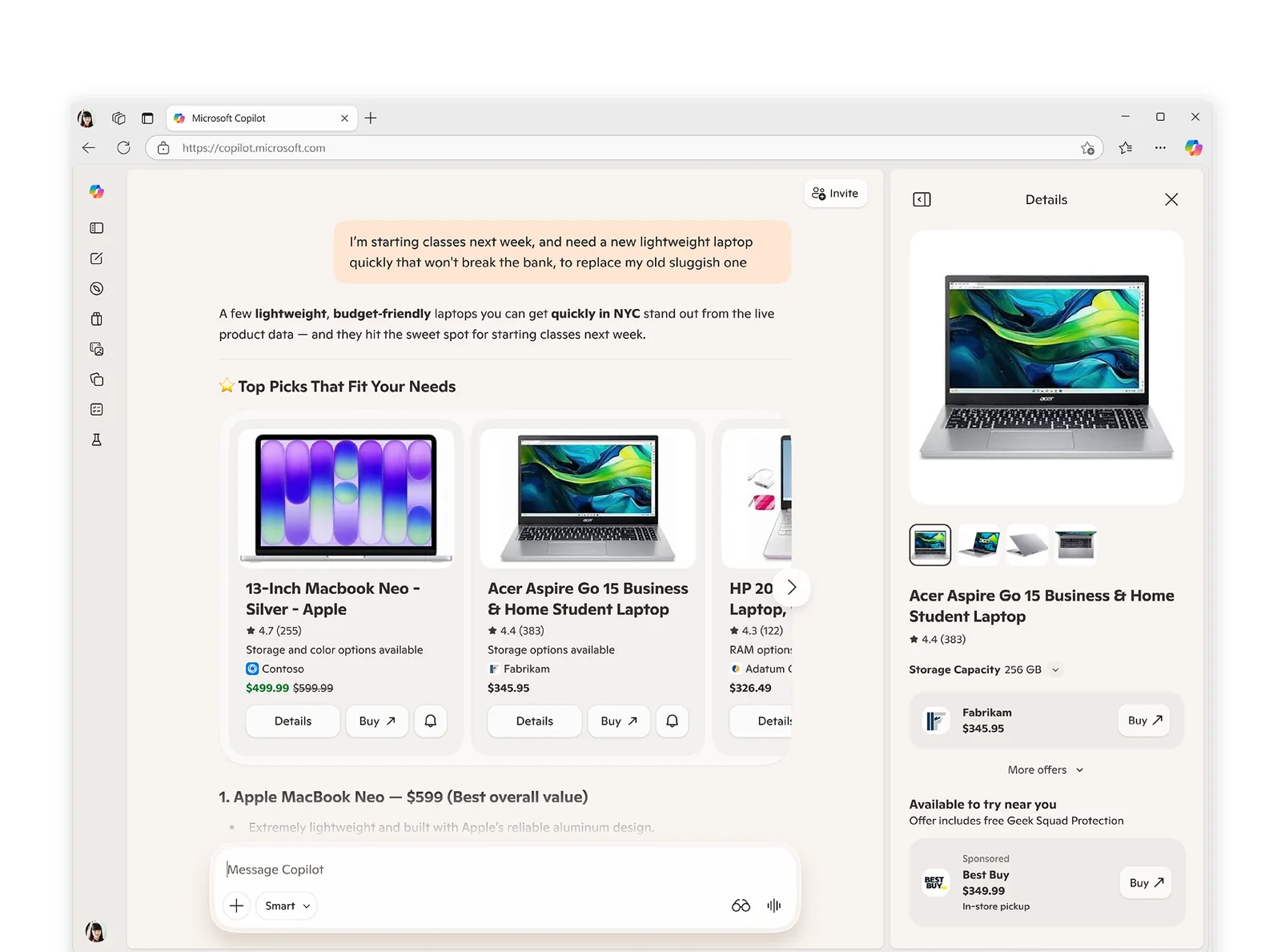
Second, commerce protocol support. Microsoft has officially launched the Universal Commerce Protocol (UCP) data source in its Merchant Center. UCP is an open standard co-developed by Google and Shopify that lets AI agents read structured product info directly. At the same time, Shopify's Global Catalog is now integrated into Copilot, making products from over 500,000 merchants searchable and purchasable inside the assistant. Microsoft says top Shopify merchants saw roughly a 90% increase in exposure within Copilot after joining. Copilot Checkout is also expanding to mobile and integrating with loyalty programs from retailers like Target.
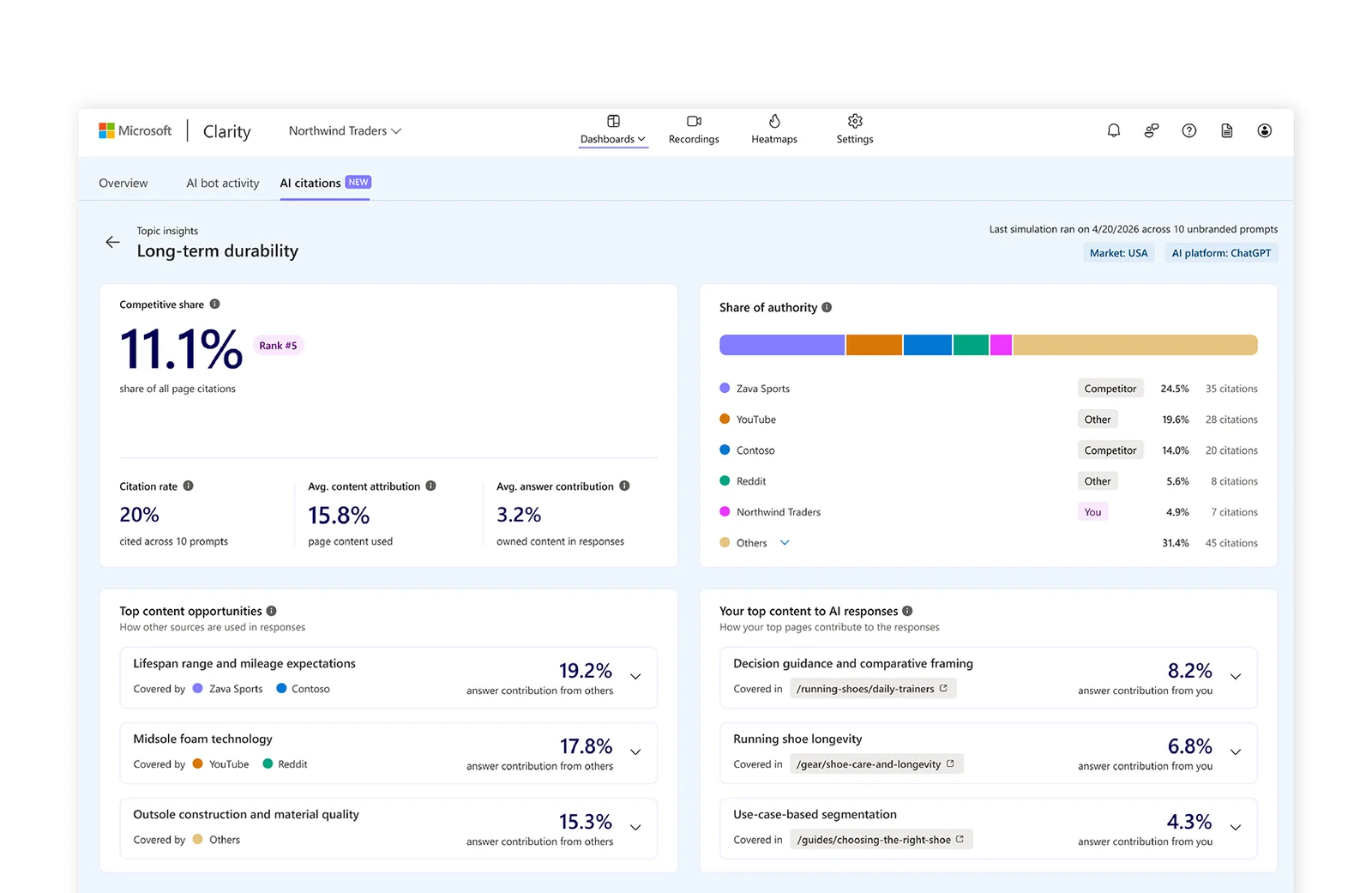
Third, advertising and insights tools. Microsoft Clarity's AI Visibility feature is opening up more broadly, letting brands see how often their pages are cited in AI answers, compare against competitors, and get content gap suggestions. New offerings include AI Max search ads (public beta in May), Offer Highlights (which surfaces product selling points in Copilot conversations), and Audience generation (describe your target audience in natural language, and AI builds the audience segment automatically).
Microsoft says it won't take a cut of transactions — only a technology service fee, which it promises to keep low. Frank noted that the company has been enterprise-focused for 51 years and has no conflict of interest competing with its customers as a platform.