DeepSeek's Founder Finally Cracks Under the Pressure

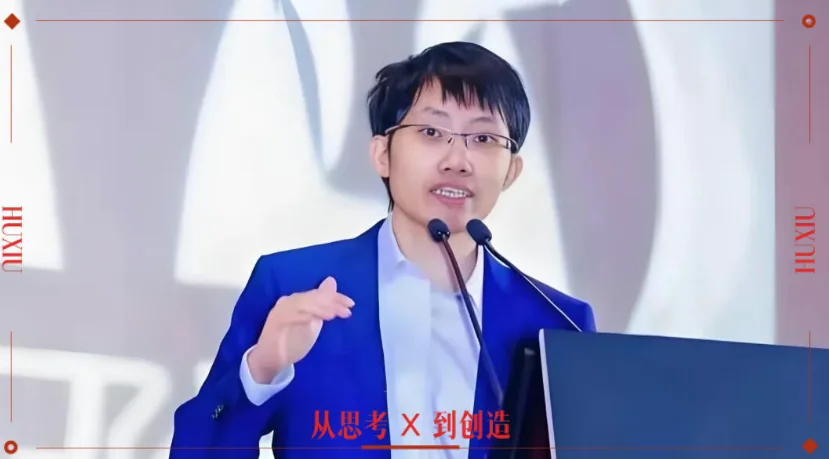
The Liang Wenfeng who's now seeking funding isn't the same man he was a year ago.
On the evening of April 17th, reports surfaced that DeepSeek is seeking a new funding round of about $3 billion at a valuation of roughly $100 billion. Just last year, Liang Wenfeng explicitly rejected VC investment, publicly stating that "DeepSeek has no financing plans at the moment." Tech media outlet Huxiu sent an email to DeepSeek for verification but hadn't received a response by publication time.
"I'm not yet clear whether Liang has actually started talking to VCs," Qiu Zhun, overseas partner at Huaying Capital, told Huxiu. Qiu travels frequently between Silicon Valley and China and has long focused on AI and embodied intelligence.
Strictly speaking, DeepSeek isn't a direct overseas project for Huaying, but VC attention is almost entirely focused on the company. Qiu is acutely aware of the challenges DeepSeek is facing, but he also told me, "That doesn't mean we wouldn't invest in them."
In just one year, Liang Wenfeng's position has done a complete 180.
On April 19th, another rumor began circulating on social media: over the past year, Liang Wenfeng had met with both Ma Huateng (Pony Ma) of Tencent and Lei Jun of Xiaomi to discuss potential funding. While the truth isn't fully confirmed, the signal being sent is crystal clear. Huxiu also reached out to Tencent for comment but hadn't received a reply by publication.
So the question is: why, after a year, has this famously restrained and low-profile founder gone from "rejecting funding" to actively courting capital? What happened in between? From my perspective, this isn't just a change in attitude—it looks more like some external constraint has become impossible to ignore.
A year ago, Liang Wenfeng had almost no real competition. Breakthroughs in architecture and algorithms made DeepSeek one of the few players in China's large model ecosystem seen as having "self-sufficient capability," and it accelerated the process of traditional enterprises adopting AI.
But in a way, it was precisely his past outstanding achievements—and the subsequent praise from hundreds of domestic and international media outlets—that led to Liang Wenfeng being "killed by kindness."
Over the past year, the narrative around DeepSeek has started to crack. On one hand, the release date for its V4 model has been repeatedly "pre-announced" by foreign media but never materialized on schedule. On the other hand, those reports directly pointed to a more practical problem as the cause of the delay: the cost of breaking free from the Nvidia ecosystem.
Yet while DeepSeek's pace slowed, external expectations didn't drop.
During this same period, the team also experienced turbulence: several key talents left, including Guo Daya, who worked on code research; Wang Bingxuan, a core LLM author; and Wei Haoran, a core OCR author.
From the outside, this once highly promising company seems to have hit a wall.
And right after these complex signals emerged, news of the funding round appeared. If you connect these storylines, one obvious answer emerges: Liang Wenfeng was forced into this position.
So let's pose a hypothetical: if Liang Wenfeng really does go to VCs for help, will they save him?
The answer I got is yes.
The Company That Got Too Much Praise
DeepSeek was "killed by kindness": its most praised capability is becoming its hardest part to adjust.
Look back to the 2025 Lunar New Year—that holiday season belonged to DeepSeek.
After the R1 release, the company was quickly elevated to an extremely high position: extreme cost-effectiveness, algorithmic innovation, a path to domestic substitution, and more. With this layered narrative, DeepSeek was pushed to a height where people looked up to it.
At the time, the external consensus was that DeepSeek wasn't just building a large model—it was rewriting a cheaper AI infrastructure.
But a year later, that narrative started to crack.
The next-generation model, originally expected around the 2026 Lunar New Year, still hasn't landed. The outside world almost unanimously believes the key bottleneck is the difficult transition from relying on Nvidia to breaking that dependency.
Yet DeepSeek's former advantage was precisely its deep binding with Nvidia.
Unlike most large models that rely on scaling, DeepSeek started with "efficiency," achieving near state-of-the-art performance through a series of algorithmic and engineering optimizations while dramatically lowering costs. For example, its proposed GRPO architecture is essentially a redesign of training and inference efficiency.
But this efficiency didn't appear out of thin air. On the compute side, founder Liang Wenfeng's early quantitative trading background gave him access to Nvidia GPU resources far beyond those of a typical startup. On the data side, DeepSeek heavily relied on distilling results from top-tier models.
The truly crucial step, however, was in the underlying engineering. DeepSeek directly optimized PTX programming, rewriting the GPU execution layer, thereby achieving a systematic reconstruction of AI compute infrastructure.
"It was precisely this step that allowed DeepSeek's 'cost-effectiveness' to be realized," Qiu Zhun explained to Huxiu.
And that's where the problem lies. PTX is essentially an intermediate language within Nvidia's CUDA ecosystem, one of its core interface layers. This means that while DeepSeek achieved innovation at the algorithmic layer, at the infrastructure layer, it's highly bound to the Nvidia system.
In other words, once you try to switch compute paths—say, to domestic chips—the problem is no longer "adaptation" but "rewriting."
Currently, most domestic chip manufacturers offer compatibility solutions for the CUDA ecosystem, but for DeepSeek, which has optimized deep into the PTX layer, that compatibility doesn't hold. The underlying code, scheduling logic, and even the entire engineering system need to be rebuilt.
Put simply: the deeper its advantage, the higher the migration cost.
This also explains some of the changes over the past year: slowed model development, organizational turbulence, and the departure of some core talent. From the outside, these are symptoms, but the underlying issue is this: DeepSeek is trying to escape the very path that once made it a leader.
This path has even prevented DeepSeek from having a chance to stand in the same tier as other top domestic models.
Qiu Zhun is an investor who lives in Silicon Valley year-round. He told Huxiu that companies including OpenAI don't over-rely on PTX optimization at the底层 because they don't want to be locked into a single compute system. Domestic internet companies are the same—they won't stake their core businesses entirely on Nvidia's compute ecosystem.
But DeepSeek has gone too deep.
Over the past year, DeepSeek has been rewriting its underlying code, but for them, it's almost starting from scratch.
VCs Have Been Waiting for Liang Wenfeng
And that's how we got the story of DeepSeek seeking funding.
A top VC investor told Huxiu, "Financing won't change anything."
The reason is already clear. From a technical perspective, this is all irreversible. Even if DeepSeek rewrites its underlying code to adapt to domestic chips, performance will take a significant hit.
From a capital perspective, however, it's a different story. "Even though I clearly understand the problems DeepSeek faces now, that doesn't stop many VCs from fighting over them," Qiu Zhun told Huxiu.
From the perspective of the large model investment cycle, DeepSeek has long missed the hype window. But even if this company is starting from scratch, even if it's missed the trend, that won't stop VCs from jumping in.
"VCs have always bet on people, and VC investment is essentially 'impulse buying,'" Qiu told me.
Liang Wenfeng's thinking, however, remains unpredictable. Based on the valuations of currently listed large model companies, DeepSeek's target valuation of $100 billion isn't high—it's even lower than any of Zhipu, MiniMax, or Kimi.
Another possibility is that, judging from Liang Wenfeng's shift from unwilling to fundraise last year to being open to it this year, perhaps Liang himself isn't willing to give up too much equity.
From this angle, whether DeepSeek will actually raise money remains highly uncertain.
If Liang Wenfeng's target is Tencent, maybe after funding, not much would change for DeepSeek—at least nothing too drastic. But if his target is all VCs, then DeepSeek might become a commercialized company, which doesn't seem to fit the company's DNA.
Will DeepSeek Come Down to Earth?
Coming down to earth would mean DeepSeek standing alongside Kimi, MiniMax, Zhipu, and StepFun, becoming one of the new "Big Five" foundational models.
Over the past year, DeepSeek has been discussed repeatedly not just because of its model capabilities, but because it looked like "an exception."
It used less money to make models that approached or even neared state-of-the-art. It rejected funding, maintaining restraint during a wave of capital frenzy. It emphasized efficiency over scale.
All of this proved that DeepSeek never followed the "established path."
But now, maintaining that "exception" is becoming increasingly difficult.
Maybe Liang Wenfeng wants to become "ordinary." Because even if you judge this company by the "established path," it still has unique advantages:
First, it's a company capable of genuine innovation, which is already rare. Second, DeepSeek isn't short on cash; his search for external help might be about sending a different signal, or even a shift in identity.
From this perspective, raising money means choosing a new path.
But if DeepSeek really does become a commercialized company, it'll need to consider something it never had to worry much about before: how to turn its model capabilities into revenue.
Of course, DeepSeek could be used within Liang Wenfeng's own quantitative trading firm, Fantasia Quant, helping generate revenue for other businesses. But if that happens, will DeepSeek still be a traditional large model company?
It seems DeepSeek is standing at a crossroads. (See: Nvidia's Jensen Huang warns of a 'terrible outcome' if China's AI models run best)